Waterway Infrastructure Approvals
Fish biology and ecology expertise
With lengthy career backgrounds in government fisheries departments and extensive experience in compiling development applications, AFPS staff can assist with navigating the complicated development approval/Waterway Barrier Works process. Our team specialises in providing expert fisheries advice, designs and essential information required by government departments to gain approvals in a timely manner.
Waterway Barrier Works
The Waterway Barrier Works (WWBW) Development Approval process can be a complicated process. A waterway barrier is any instream structure that prevents fish from moving upstream or downstream past the structure. The construction or raising of waterway barrier works within a waterway, is regulated under all state legislation. For example, a development application under the Planning Act 2016, or compliance with the Accepted Development Requirements for operational works that is constructing or raising waterway barrier works, is required in Queensland. The construction of an instream barrier can also trigger additional legislative provisions including marine plants, tidal works, native vegetation clearing etc. AFPS have extensive experience compiling WWBW applications including responding to and satisfying any additional State Development Assessment Provisions.
AFPS can :
- Assist and advise on Waterway Barrier Works applications
- Complete Waterway Barrier Works applications on your behalf
Projects

Big Al’s Brook Realignment 2020-2025
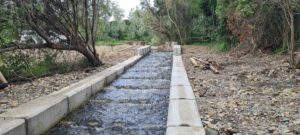
The 350 m realignment of Big Al’s Brook created refuge ponds with stepped sandstone walls, vegetated banks, and run habitats to support fish passage and habitat complexity. AFPS monitoring recorded 83 fish from nine species, with strong use of instream vegetation and sandstone wall voids by fish, shrimp, Macrobrachium spp., and eels. A turtle sighting further demonstrates the habitat diversity supported by the new alignment.

Oyster Creek Realignment 2018-2026
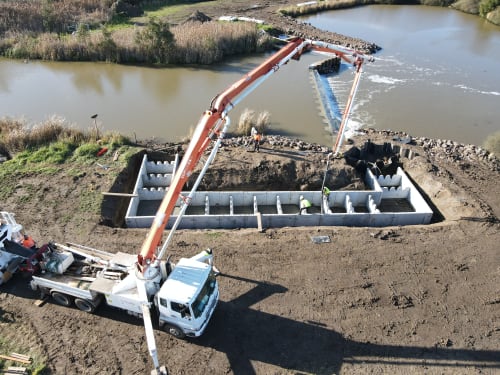
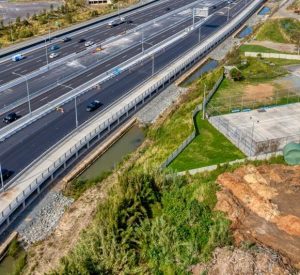
The Oyster Creek realignment reshaped 870 m of waterway and integrated modern fish passage and habitat features, including refuge ponds with LUNKERS, woody debris, and run habitats with cross‑vanes. AFPS monitoring has recorded strong ecological performance, with 11 fish species (11–445 mm) and eels to 1.2 m using the system. The presence of 11 mm larvae confirms effective passage, and the new habitats are supporting diverse birdlife such as pelicans, swans, and ducks.

Fitzroy Basin Association Fishways Project 2020-2023
AFPS worked with the Fitzroy Basin Association to undertake eight fish passage improvement projects in the Fitzroy Basin. Four rock ramp fishways and one cone fishway were constructed, one crossing upgraded to fish-friendly box culverts and two baffle installations were carried out in the catchment.
Rookwood Weir 2019 – Present
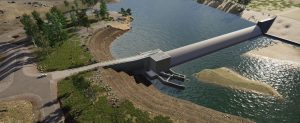
AFPS worked in conjunction with sunwater and GHD to progress the approval of Rookwood Weir and fishway.
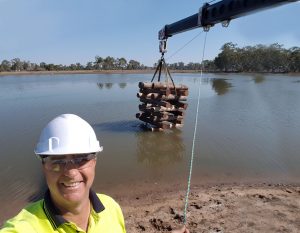
Yeppen Lagoon Log Fish Hotels 2018
AFPS undertook the installation of log ‘fish hotels’ into Yeppen Lagoon to increase the amount of fish habitat available to the fish community.
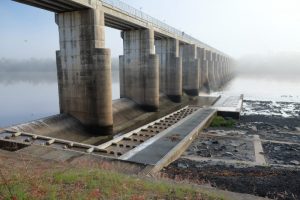
Fitzroy Barrage Cone Fishway 2015
AFPS worked with the Fitzroy Basin Association to design and supervise construction of a cone fishway to complement the existing vertical slot fishway on the Fitzroy River, Rockhampton, QLD.
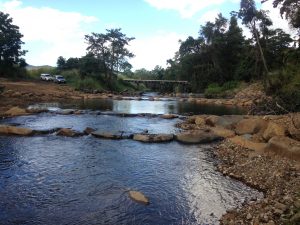
Gregory River Cross Vanes – 2013
AFPS staff supervised the construction of Cross Vane erosion protection structures in the Gregory River, near Proserpine in Central Queensland.